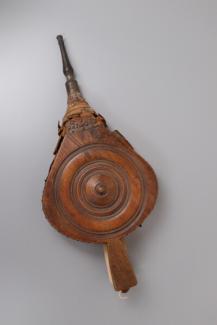
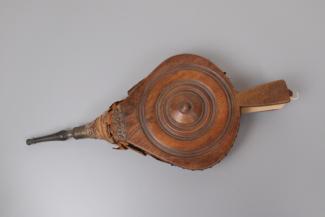
The body of the bellows is made of two panels of wood, with a concertina of fabric in between and a long, narrow metal nozzle. This would have been pointed at a fire, or into the coals in a coal iron, and the two sides pushed together to create short bursts of air which would stoke the embers. This could have been used by an individual to keep the fire lit in their own home or by a housemaid in her daily tasks working for a wealthy family.
Households with many servants during the Georgian period had a strict hierarchy. The Housekeeper, who would have been one of the upper servants, oversaw all the women working in the house. This would include the housemaids (or chambermaids) who were considered part of the lower servants. Some more affluent families would even divide the housemaids into two further groups which impacted the tasks they were expected to perform. Generally, housemaids were responsible for tasks such as cleaning and lighting the fires throughout the home Using bellows like these to stoke the flames and keep them lit.
This object was audited and researched as part of the Heritage Fund Data Hunters and Story Gatherers project.