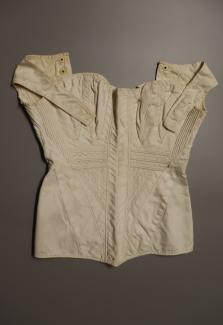
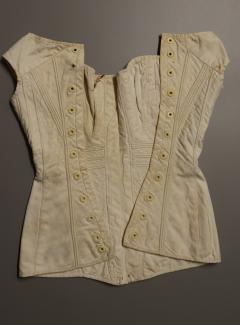
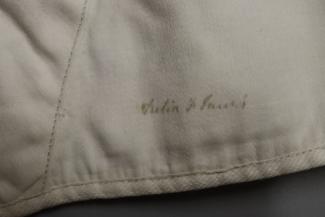
A corset in white cotton with cream silk embroidery and bone lace hols dated to around 1820.
The corset is an undergarment that keeps the waistline more natural and aims to create a smaller waist with padding and shaping. Features of the corset shaped gowns to be fuller at the top and had a shaped basque area below the waist and shoulder straps as they were more common at this time. By the 1820’s, the Empire silhouette (a style of a high waistline) fell out of fashion and then corsets became fashionable once more, along with the complex, structured gowns associated with the Victorian Era.
The industrialisation of the garment industry meant that by the 1830s, steel boning had begun to replace the classic whalebone due to its lower cost and easier availability. The rise of steel boning, as well as metal eyelets and clasps meant that corsets were significantly tighter. Corsets were made with cotton and boned with baleen (whalebone), also with wood or metal eyelets to allow tighter lacing.
Each corset was made by hand by one person from start to finish, either at home or by an individual craftsman, called staymakers. But by the 19th century, most corsets were made in factories, each step was done by different groups of people, often children.
This object was audited and researched as part of the Heritage Fund Data Hunters and Story Gatherers project.