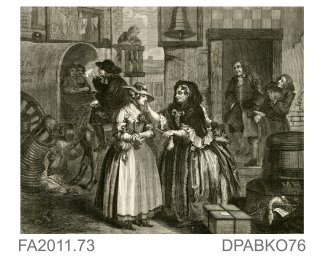
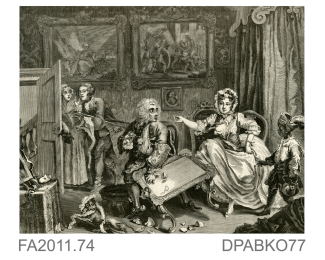
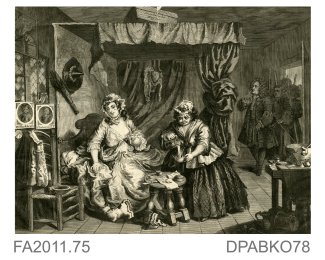
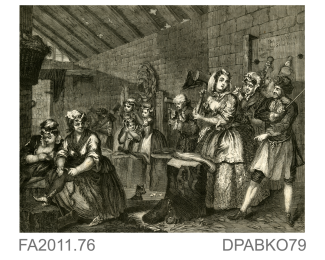
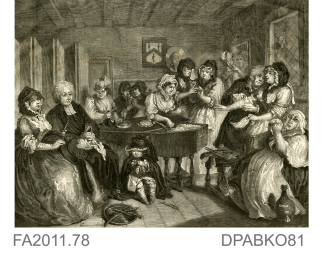
Print engraving of A Harlot's Progress I - VI, from The Works of Hogarth.
A Harlot’s Progress is one of William Hogarth’s modern moral subjects. A series of six oil paintings created in 1731 it depicts a woman Mary ‘Moll’ Hackabout as her life unfolds when she arrives in London.
In the first scene Mary meets a woman in the street who is possibly meant to represent a real woman called Mother Elizabeth Needum, a board who ran a brothel in London in the 1730s. Elizabeth was convicted of running a disorderly house. In Winchester there is a record of a woman called Sarah Rodgers being convicted of the same offence in 1790.
Hogarth uses symbolism throughout the paintings to indicate his moral objections towards sex work. It is interesting to note that the original paintings, sold to William Beckford in 1731, were destroyed when his house caught on fire in 1755.
I 'The Arrival in London'
II 'The Jew, the Mistress, and the Lover'
III 'The Harlot's Downfall'
IV 'The Harlot in Bridewell'
V 'The Death'
VI 'The Funeral'
This object was audited and researched as part of the Heritage Fund Data Hunters and Story Gatherers project.