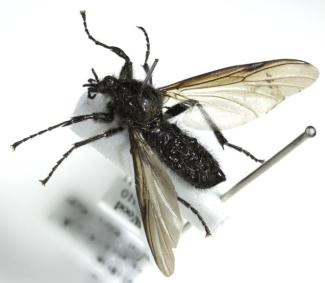
The first appearance of males of the Bibionid fly Bibio marci in late April each year coincides approximately with the 25th of the month which is St. Mark’s Day, after which this fly is named. St. Mark’s flies can be seen between April and June swarming lazily over hedgerows with their long legs dangling, or feeding on nectar from hawthorn flowers (the Hawthorn fly is its other common name). It is also considered to be an important pollinator of fruit trees.
The swarming males hope to attract the female flies which, after mating, lay their eggs in soil or on decaying matter such as compost heaps. The larvae hatch in the autumn and scavenge on rotting vegetation and the roots of grass and other plants (where they can cause commercially important damage) until the following spring when they pupate and develop into adults.