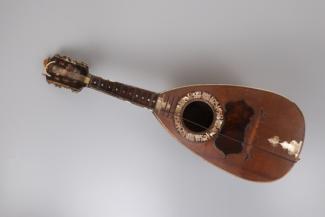
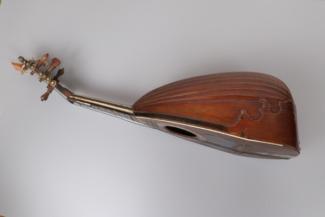
The mandolin is an instrument that would have been played for entertainment by members of the upper classes and nobility, usually women. They would learn how to play instruments like the mandolin to play for friends and guests at social gatherings.
This mandolin is decorated with mother of pearl inlay and gold on the handle and was made in Italy during the 1700s. Therefore, it was probably owned by someone of some wealth as it would have been expensive to buy and considered more of a decorative piece than an instrument used by a working musician. Young women during the 1700s may have had a private tutor who would have taught them at home.
The mandolin has been well cared for but well used as while it is mostly intact there are several strings missing and a split down middle of the back.
This object was audited and researched as part of the Heritage Fund Data Hunters and Story Gatherers project.