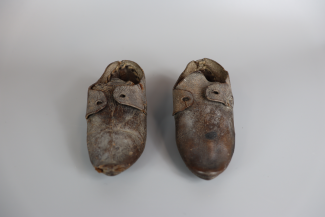
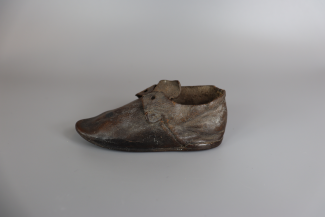
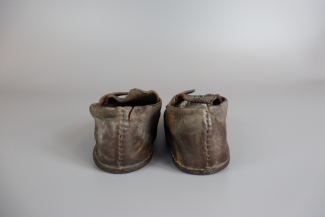
Baby’s leather shoes, with pierced flats over arches for fastening ribbon or ties which are missing. Dated to the 18th century.
During the 1800s the display of wealth was seen through fashionable clothing and by the feet. Both men and women wore fancy shoes that displayed their status and their fashion interest, women of the late 18th century wore high-heeled shoes that were made of colourful silk or exquisite leather, that may have even been sometimes decorated with gold or jewels. Women would rarely wear matching materials to their dress and shoes as it would be too expensive, some shoes were laced while others had ornamental buckles.
Men’s shoes would usually be a dark leather with shiny metal buckles highlighted beneath light coloured stockings (tight elastic garments covering the leg from the foot to the knee, and sometimes all the thigh). The buckles men wore would be made of a common metal like silver or brass, sometimes with engravings, and sometimes the shoes would be coloured for special occasions. Shoes and boots of the 1800s were made on straight lasts (wood or metal templates to shape shoes) and since both shoes were no different to the left or right people often switched shoes to reduce pain as it was not easy to break into a pair of shoes because there were only two sizes, slim and basic.
From the beginning of the 1800s, children's shoes have changed due to experimentation and fashion trends like decoration on shoes e.g. gold. They have also changed by a combination and mixture of colours, patterns, materials, designs and styles. Some infants at the time might have multiple shoes over the years as their first were often made of a soft fabric or silk, their second shoes would be tougher and would be made with thicker cloth or leather.
They would sometimes have ribbons and some fancy patterns on them like engravings often with plants or flower decoration. Life for shoemakers were rough as could barely maintain their wage and worked for very low wages and many couldn't afford lodging (housing) at all, and if they did their housing was very poor. Their trade used a lot of leather, which required money, and so some shoemakers had to reduce the thickness of leather used for heels and soles, some very desperate to feed their families, would steal food or clothing and be sent to jail, or worse, hung.
This object was audited and researched by Rufus Smith, a work experience volunteer as part of the Heritage Fund Data Hunters and Story Gatherers project.