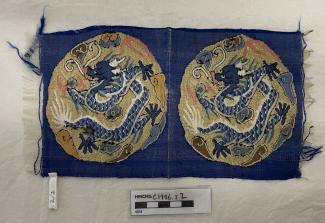
A blue rectangular Chinese tapestry with two circular embroideries at the centre. Both are gold in colour and contain identical blue, serpentine dragons. The dragons both seem to be surrounded by either gusts of wind or ocean waves represented in various colours of blue, brown and yellow. The edges of the tapestry are slightly frayed and tattered, perhaps suggesting former attachment to a larger item, or simple wear and tear. The usage of the tapestry is unclear, though similar items were popularly used as decoration in British domestic settings in the 19th century.
The central motif of the two serpentine dragons is considered high status and socially prestigious in Chinese culture. A famous symbol of the imperial court and the Qing dynasty that preceded the current Chinese republic, dragon symbolism on decorative items was found during the Anglo-French storming destruction of the then Emperor's Summer Palace in 1860. The removal of dragon embroideries from China to Britain meant that the dragon perhaps came to symbolise the imperial and colonial domination of Britain and the empire. The dragon imagery became popular in Britain in the late 19th century, alongside other associated motifs of birds, flowers and other natural scenes, which continued until the early 20th century and even captured the royal imagination.