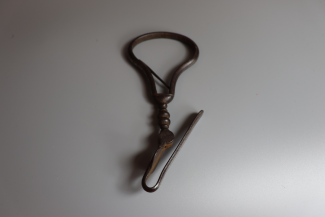
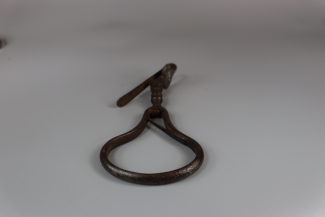
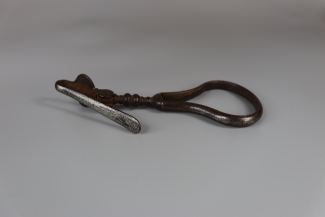
This is a steel Victorian period chatelaine. However, chatelaines were widely worn from the 1600s through to the early 1900s. Chatelaines were practical forms of adornment designed to hold everyday implements. They feature a top that is clipped or pinned to a belt or skirt with several dangling chains attached to hold objects for personal use or household duties. They were made in several styles using precious material like steel, gold, copper and silver.
The name chatelaine is a French term referencing the "lady of the castle." It was hooked to a skirt or belt that held keys kept by the woman of the house. The chatelaine evolved, and chains were added to hold various implements. Each implement was hooked to its chain so that the item could be detached, used, and reattached. Examples of objects dangling from a lady’s chatelaine would be scent bottles, mirrors, button hooks, sewing and needlework tools, pencils, and notepads. Both men and women wore them, with men's versions holding watches, knives and wax seals.
In France it was considered as a symbol for status and power. The ‘lady of the castle’ directed all the servants and possessed total authority over who had access to anything in the house. When a woman married a boy and the couple moved into his father’s house, the boy’s mother would have authority over the chatelaine that holds the keys to the locked items. However, if the mother became a widow the chatelaine and the status that came with it, was passed to the wife of the eldest son. In the absence of the woman of the house, control of the chatelaine was passed to the head housekeeper.
This object was audited and researched as part of the Heritage Fund Data Hunters and Story Gatherers project.