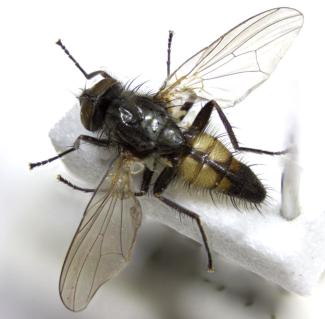
The Lesser house fly, Fannia canicularis, frequently enters buildings between the months of May and October. It may be seen silently flying in a semi-rectangular circuit around down-hanging objects such as light bulbs and lampshades: this is a ‘patrol’ flight in which a male guards a ‘territory’, and will give chase to any intruder (the guarding male tends to fly at a higher level than the new-comer). During short breaks and during the night, the flies sit on lamps or on walls and leave small dark faecal spots.
Their larvae may be found feeding on any moist nitrogen-rich decaying matter, ranging from rotting vegetable and animal detritus to dung and human excrement. Unlike common housefly larvae, Fannia larvae are characterized by having fringed appendages along their sides which help them to float in semi-liquid material. Both ‘Lesser’ and ‘Common’ house flies may move from excrement to human food so can be considered as possible disease carriers!