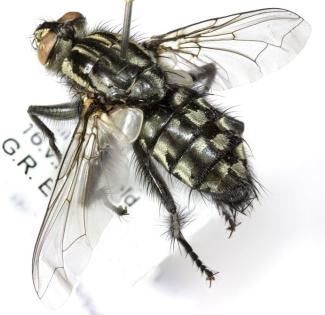
Sarcophaga variegata, like other members of the family Sarcophagidae, are different from many other fly families in that, instead of laying eggs, they deposit hatched or hatching larvae (maggots) on decaying material, dung, and carrion – giving them the common name ‘Flesh Flies’.
While these flies primarily lay their larvae on dead organisms, they may also place them on open wounds of animals, and there have been records of the larvae feeding on live humans and causing injuries or illnesses.
The larvae immediately begin feeding and after about 5-7 days they will leave their food source and enter the surrounding earth to pupate. Adult flies emerge from pupae within about 3 days.
Times are obviously dependent on conditions such as temperature and humidity, and these are important considerations when determining time of death during post-mortem investigations of human cadavers.