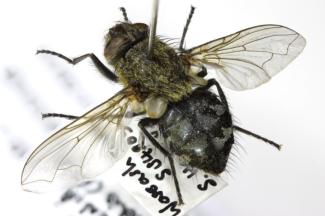
The Common cluster fly, Pollenia rudis, is recognisable by the mat of golden hairs on its thorax (the section of the body behind the head). These flies are a nuisance – not because they are a health hazard or cause damage to structures or textiles – but solely because of their habit of entering through any gaps in buildings in large numbers during the late autumn, overwinter in attics and the like, and then appear in large numbers the following spring in upper-storey rooms.
Adult flies mate in the autumn, and the female cluster fly lays eggs on damp soil. The first larval instars hatch after about a week and will burrow into soil and, by following pores in the ground and worm holes, will search out earthworm hosts. It is essential to locate and penetrate a host within a few days or the larvae will perish - one or more larvae can use the same earthworm host.
The larvae remain dormant over the winter period within the body of the worm. In the spring they proceed to feed on the earthworm, undergoing two larval growth stages or moults (usually within about 3 weeks) before pupating. Adult flies emerge within 3 or 4 weeks. The adult fly feeds on organic matter ranging from flowers to excrement.