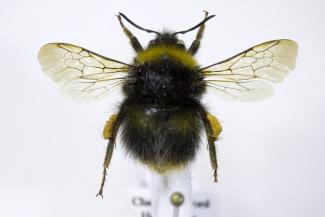
The Early bumblebee, Bombus pratorum, is one of the most common and widespread of the bumblebees present in the UK. Young queens (which would have been fertilized in the late summer of the previous year) typically look for old rodent burrows to establish a nest site and start a colony. Initially these queens lay down a large food store before producing the eggs from which female workers develop. These female workers could lay infertile eggs which would become male bumblebees, but they are controlled by the aggressive behaviour (gnashing mandibles or head-butting!) of the queen to establish her dominance.
Some workers undertake duties within the nest, while others collect the protein-rich pollen from flowers to feed the colony’s larvae and provide them with important nutrients. The amount of pollen collected can be increased by the bumblebee using its mandibles to grasp the bottom of anthers (the male parts of flowers which contain the pollen) and with the vibration of its flight muscles cause the release of a shower of pollen. The bumblebee then uses its legs to comb the pollen from its hair and store it in ‘pollen baskets’ on the hind legs. Male bumblebees do not collect pollen.
In addition, as it flies, a bumblebee develops a positive charge of static electricity over its body (like us rubbing a balloon on a woollen jumper and then watching the response of our hair move when the balloon is held near our head). However, flowers are negatively charged, and so their pollen is attracted to the hair of the bee as it lands. Interestingly, recent research suggests that some positive charge from the bee cancels some of the negative charge of the flower, and this reduction in the charge of the flower can be sensed by the next bumblebee approaching and so recognises that this flower has been recently visited and will have a diminished supply of pollen!