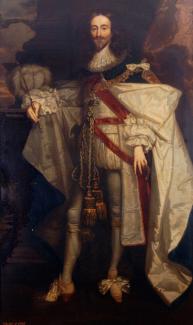
King Charles I
Oil painting on canvas by an unknown artist, around 1650
King Charles I has the unenviable distinction of being the only English monarch to be tried and found guilty of treason and sentenced to death. The causes of the split from Parliament and the subsequent civil war are numerous but it was Charles' defeat at the hands of Parliament that led to his execution on 30 January 1649.
The City of Winchester had been a Royalist city for the majority of the Civil War and it was given one last opportunity to display this loyalty in December 1648. The king had been held at Carisbrooke Castle on the Isle of Wight and was transported to London for his trial. Breaks were required in the journey and one overnight stop was in Winchester. The king spent the night in the Westgate and despite the times and the king's position the Mayor and Aldermen of Winchester received Charles with all dutiful respect and presented him with the keys and mace of the city. They addressed him in a speech full of affection but upon being reminded that the House had declared all who should address the King to be traitors the officials protested their ignorance of the will of the House and dispersed. The king continued his journey to London, and ultimately the scaffold, the next morning.
Given the loyalty of the City to the Royalist cause it perhaps should have been of little surprise to the House of Commons that the king was received in such manner. Even amongst the supporters of Parliament there were reservations about trying the king for treason. Charles was due to be tried by 135 judges but only 68 turned up for the trial and even then none of them would consent to be appointed chief judge.