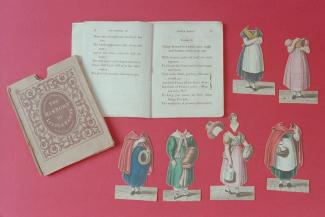
‘The History of Little Fanny’ is believed to be the earliest paper doll created specifically for children. It was first produced in 1810 in London. Made from cardboard, a girl’s head can be placed above six different outfits, creating a doll. At the top of each page of the accompanying rhyming book, Fanny’s clothing is described for each scene. These include an outdoor coat and muff; a cape and carrying a wicker basket or an indoor dress and holding a book.
How did wealthy Georgians warn their daughters of life’s possible dangers? One way was storytelling. This rhyming story tells the tale of Fanny, a vain child, who wants to show off her new clothes so disobeys her mother by going out, with her “wicked maid”, to do so. After being enticed away and robbed of everything, she ends up a beggar. Moving up the social scale, Fanny becomes an errand girl, selling dairy products. She is sent to her family’s house, where she is reunited with her mother. The story ends with Fanny
becoming a “pious, modest” and “happy child”, more interested in reading; being “no longer idle, proud or vain”.
No Georgian girl could be left in doubt of the moral of this story and how she should conduct herself!