History
Mola is a traditional hand-made textile by the Guna people indigenous to the San Blas islands, Panama. Alongside the aesthetic appeal, molas are representative of the core values which are located in the deeper layers - symbolised through the layers of fabric. Molas are also be symbolic of the individual's identity and generally adopted two overarching styles being naga (protective) or goaniggadi (everyday life). Both styles typically include the use of geometric patterns and stylised representations of nature and animals. To add, molas are made using a reverse appliqué technique meaning that the layers of fabric are exposed rather than attached to the fabric (appliqué). In practice, the mola work starts off as two to seven layers of different coloured fabric sewn together, with the individual gradually removing layers to exposure colours that are then turned and sewn down. This making of molas is traditionally associated with women who would create molas to wear and pass their knowledge to their daughters. Ultimately, molas are used as art pieces and traditional clothing and can be designed to tell a range of stories or show symbolic meanings.
Design
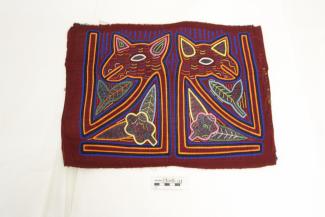
This mola design features two animal faces featuring an alternate colour scheme on the same set of fabrics. Following the reverse appliqué technique, there are multiple layers of fabric sewn together as shown on the right hand edge. Considering the range of colours on the faces, this is a highly skilled example of Mola work emphasising the planning and detailed design required prior to starting.
This object was audited and researched as part of the NLHF Data Hunters and Story Gatherers project.