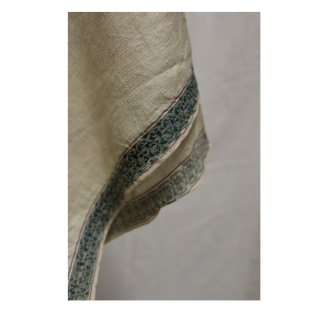
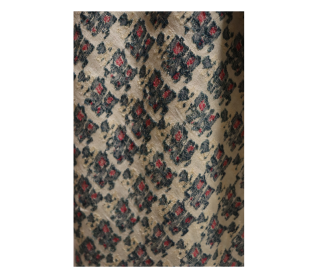
The Kashmir shawl inspired the worldwide cashmere trade. It originated from Kashmir, a region now in Indian, and is spun from the wool of the Changthangi goat. The Kashmir shawl arrived in Europe in the 18th Century, through English and French officials stationed in the Indian subcontinent, and became a symbol of luxury and status. Into the 19th century they became further imbedded in English culture, becoming heirlooms which would be passed down to women and became associated with marriage and maturity.
A Kashmiri shawl would sometimes feature a buta design, a repeating pattern which would go on to inspire the Scottish created paisley design.
This shawl could have been worn by a Georgian middle-, or upper-, class lady. Alternatively, it may have been gifted to a high ranking female servant such as a housekeeper, ladies' maid or governess.
This object was audited and researched as part of the Heritage Fund Data Hunters and Story Gatherers project.
Georgian Women in Work 1770-1820