You searched for: Insect
Results: 107
Filter search results
-
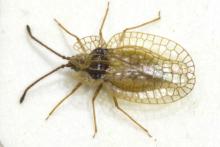
InsectsBugHMCMS: Bi2018.1.1575It is the intricate pattern of cell formation on the body and forewings that give Derephysia foliacea, and other members of the Hemipteran family of Tingidae, the name ‘lacebugs’. They are ‘true’ bugs ...Visit Page
-
InsectsBugHMCMS: Bi2018.1.1502The bug, Hydrometra stagnorum , may be observed around the plant-covered margins of ponds, ditches and slow-moving streams. They move slowly on the surface of the water in search of prey: it is this ...Visit Page

-
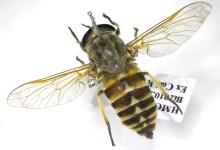
InsectsFlyHMCMS: Bi2010.25.58With a length of about 25mm, the Dark giant horsefly, Tabanus sudeticus , is reputed to be the heaviest fly in Europe. Although the adult flies feed on nectar, it is only the females which will seek a ...Visit Page
-
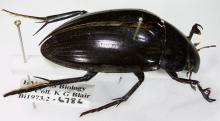
InsectsBeetleHMCMS:Bi1973.2.6786Like other silver water beetles, Hydrophilus piceus, is so-called because, when submerged, its underside appears silver because of the layer of air held by a covering of small hairs. It swims with ...Visit Page
-
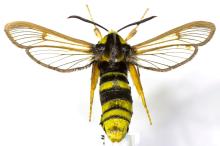
InsectsMothHMCMS:Bi2007 11 3999.1The Hornet moth, Sesia apiformis , is a large, clearwing moth often seen in parkland, marshy areas and other open habitats. Its similarity to hornets, both in colouration and the jerky flight pattern ...Visit Page
-
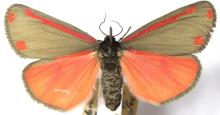
InsectsMothHMCMS:Bi2007.11.6946The Cinnabar moth, Tyria jacobaeae, is so-called because the patches of red on the otherwise black forewings are similar in colour to the bright red colour of the toxic mercury sulphide mineral ...Visit Page