You searched for: All
Results: 17469
Filter search results
-
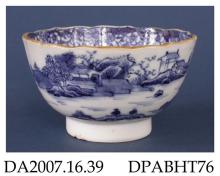
CeramicsTea bowlHMCMS:DA2007.16.39Tea bowl, porcelain, ogee rim, decorated with a blue painted scene of temples, rocks and trees by a river or inlet, floral border inside rim; not marked, probably Chinese, c1775-1800Visit Page
-
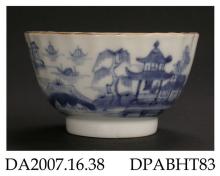
CeramicsTea bowlHMCMS:DA2007.16.38Tea bowl, porcelain, fluted shape, decorated with a blue painted scene of temples and river traffic, gilt rim and triple border inside; not marked, probably Chinese, c1775-1800Visit Page
-
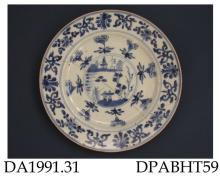
CeramicsPlateHMCMS:DA1991.31Plate, hard paste porcelain, rim edged in brown, painted cobalt blue central landscape, surrounded by flower heads and border of flower sprigs and scrolls, sprigs underneath the rim; not marked, made in Jingdezhen, Jiangxi Province, China, c1760-1790Visit Page
-
CeramicsTea bowlHMCMS:DA1990.45Tea bowl, hard paste porcelain, solid lustrous brown glaze on outside, the interior decorated with a peony in a vase and stylised rock in famille rose colours; not marked, made in Jingdezhen, Jiangxi Province, China, c1740Visit Page
items decorated with this characteristic brown glaze ground are known as 'Batavian' ware, from Batavia, the contemporary Dutch name for Jakarta; this trading centre in Java was the Dutch traders' first point of contact with wares made on the Chinese mainland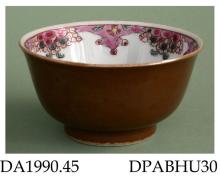
-
CeramicsSaucerHMCMS:DA1990.42Saucer, hard paste porcelain, ogee rim, decorated with a blue painted diaper and dagger border and a central scene including a figure on a single-arched bridge and another in the doorway of a pagoda; not marked, made in Jingdezhen, Jiangxi Province, China, c1780-1800Visit Page
the design includes elements (the bridge, the figure in the doorway and rocky island) used by various English manufacturers from c1780 in the printed 'Two Temples' pattern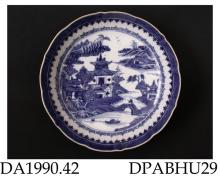
-
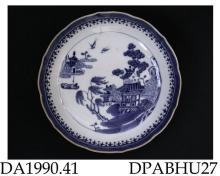
CeramicsSaucerHMCMS:DA1990.41Saucer, hard paste porcelain, broadly ribbed shape with ogee rim, decorated with blue painted 'Mandarin' pattern, made in Jingdezhen, Jiangxi Province, China, c1780-1800Visit Page
this formalised scene is the basis of the English 'Willow' pattern, though it lacks the triple arched bridge and three figures seen when first produced in Staffordshire by Spode c1790