You searched for: All
Results: 17469
Filter search results
-
ToysSpellicansHMCMS:D1991.18Spellicans, wooden box with sliding lid, containing 4 ivory rods with hooks at one end and 67 ivory rods pointed at one end and cut to various shapes at the other, many of the rods have Roman numerals marked on them in redVisit Page
This is probably more than one set of spellicans as some of the rods are much thinner than the rest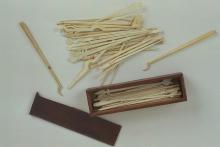
-
ToysDollHMCMS:BWM1967.566Doll, wax shoulder head and arms, stuffed linen body, red sealing wax feet, c1810-1819Visit Page
the doll is wearing; a white chemise, a waist length petticoat, a corset, a full length petticoat with tucked borders, a white dress with high waist, three quarter length sleeves, lace round neck, multiple tucked borders round skirt and sleeves, cape, cap and lace bonnet
the doll was bought at Lymington Fair in 1829 and dressed by Ann and Emma Fleetwood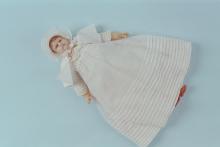
-
ToysDollHMCMS:BWM1967.565Doll, wax shoulder head and arms, stuffed linen body, red sealing wax feet, wearing a brown jacket and trousers with silver bead detail, white collar and straw hat, c1810-1819Visit Page
the doll was bought at Lymington Fair in 1829 and dressed by Ann and Emma Fleetwood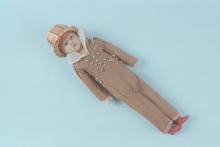
-
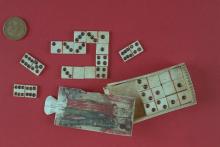
ToysDominoesHMCMS:AOC627Dominoes, bone box with sliding lid, containing a double six set of small bone dominoes, the lid is painted in red, blue and black with two figures, made by French prisoners during the Napoleonic Wars, c1810-1815Visit Page
-
ToysTrapHMCMS:ACM1956.73Trap from teh game Bat and Trap. Wooden, hand carved and showing signs of use, for trap and ball, 19th century?Visit Page
This game involved two teams. The batter would place a ball onto The trap machine. They would hit The trap leaver propelling the ball into the air and try to hit it.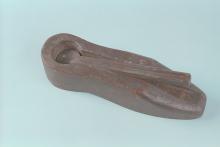
-
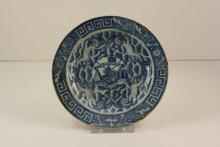
CeramicsPlateHMCMS:HCMS1972.195Plate, small, earthenware, blue transfer printed Trafalgar design, made in Leeds, West Yorkshire, about 1805Visit Page
Old label reads; Design: BATTLE OF TRAFALGAR Factory: Hartley, Greens and Co., Leeds Pottery, Jack Lane, Hunslet, Leeds, Yorkshire. After 1805. Up to c. 1775, outstanding events were usually officially commemorated by striking silver medals to designs by well-known engravers. After the War of Independance potters at Leeds and Liverpool produced many historical and satirical items from their own engravings for export to the United States, starting a fashion for collecting commemoratives which was eagerly exploited by the makers of blue-printed earthenware almost immediately. The Naploeonic Wars provided the next big event for celebration. Nelson's victory at Trafalgar in 1805 was a natural subject for the home market but with the exception of Doulton, Leeds, was the only factory to exploit it.