You searched for: Insect
Results: 107
Filter search results
-
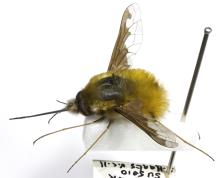
InsectsFlyHMCMS:Bi2019.2.3300With its broad hairy body, it is not surprising that the common name for Bombylius major is the ‘Large bee fly’, and it may easily be mistaken in flight for a bumblebee. This resemblance to bees ...Visit Page
-
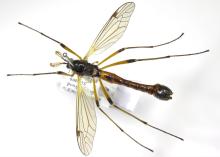
InsectsFlyHMCMS Bi2018.1. 2355Like other members of the cranefly family Tipulidae, the long, spindly legs of Tanyptera atrata give them the nickname ‘Daddy-long-legs’. Craneflies are often attracted to lights and may enter through ...Visit Page
-
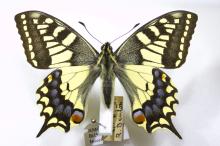
InsectsButterflyHMCMS: Bi1991.18.3035With a wing-span of 80-90mm, the Swallowtail, Papilio machaon ssp britannicus , is the UK's largest, and rarest, butterfly. It has been suggested that the two antennae-like ‘tails’, together with the ...Visit Page
-
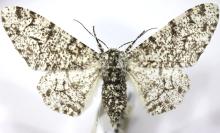
InsectsMothHMCMS: Bi2007.11.6058The peppered moth, Biston betularia, is a common moth present in gardens, parks, hedgerows and woodland. They have pale-coloured wings with black markings; however, in the mid-1800’s, English ...Visit Page
-
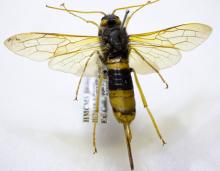
InsectsSawflyHMCMS: Bi2018.1.5109With a body length of about 40mm, this female Urocerus gigas is commonly known as the ‘Greater horntail’ or ‘Giant wood wasp’, and is one of U.K.’s largest sawflies. It is found in coniferous forests ...Visit Page
-
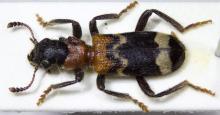
InsectsBeetleHMCMS: Bi2019.2.6794The Ant beetle, Thanasimus formicarius , is so called because it has bright, conspicuous markings similar to velvet ants which are found in the same habitats, but have a very painful sting. The ...Visit Page