You searched for: Insect
Results: 107
Filter search results
-
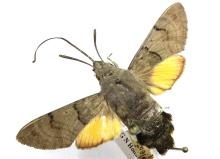
InsectsMothHMCMS: Bi2003.27.1282Whereas the Deaths-head Hawkmoth (see this Collection’s website) was once feared and considered to be ‘the device of evil spirits’, the smaller Hummingbird Hawkmoth ( Macroglossum stellaterum ) was ...Visit Page
-
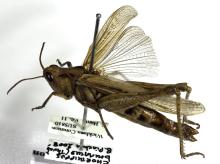
InsectsGrasshopperHMCMS: Bi2019.2.3511The Common Field Grasshopper, Chorthippus brunneus, feeds on the grasses present in dryish meadows, roadside verges, woodland clearings and the like. It becomes very active in hot weather, and is ...Visit Page
-
InsectsMothHMCMS: Bi2008.21.46With coloured hairs forming a skull-like pattern on its thorax (the part of the body immediately behind the head) it is understandable how the Death’s Head Hawkmoth, Acherontia atropos , has acquired ...Visit Page

-
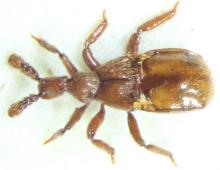
InsectsBeetleHMCMS: Bi1973.2.1531As its common name implies, the 2mm long Yellow ants’-nest beetle, Claviger testaceus , lives in the underground nests of the Yellow meadow ant, Lasius flavus , found in rough grassland. This ...Visit Page
-
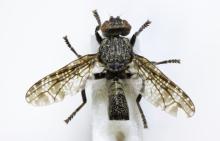
InsectsFlyHMCMS Bi2017 1 1352From May to October, Platystoma seminationis can be observed around shady vegetation alongside hedgerows and woody edges where they feed on the nectar and pollen of spurge (Euphorbiaceae) plants; they ...Visit Page
-
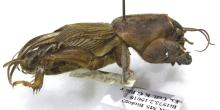
InsectsCricketHMCMS: Bi1973.2.15018Living in burrows underground and having powerful forelegs modified for digging, it is understandable that the Orthopteran Gryllotalpa gryllotalpa is called the ‘Mole cricket’. Having a subterranean ...Visit Page