

You searched for: Insect
Results: 107
Filter search results
-
InsectsCicadaHMCMS: Bi1973.2.31613Previously found almost exclusively in Hampshire, the elusive New Forest Cicada, Cicadetta montana , was considered to be ‘extinct’ in the mid-1990’s following habitat changes from grazing and ...Visit Page

-
InsectsBeetleHMCMS: Bi1973.2.17015Writing about the glow-worm, Lampyris noctiluca , in his ‘Book of Insects’, the 19th Century French naturalist Fabre suggested that f ew insects enjoy more fame than the Glow-worm who celebrates the ...Visit Page

-
InsectsBumblebeeHMCMS: Bi2001.12.1127The Early bumblebee, Bombus pratorum , is one of the most common and widespread of the bumblebees present in the UK. Young queens (which would have been fertilized in the late summer of the previous ...Visit Page

-
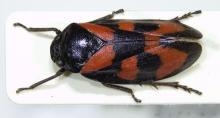
InsectsFroghopperHMCMS: Bi2020.2.792With a length of about 10mm, the Red-and-black Froghopper, Cercopis vulnerata , is one of the largest, and most identifiable, of a family of ‘True bugs’ known as Spittlebugs. The adult froghopper uses ...Visit Page
-
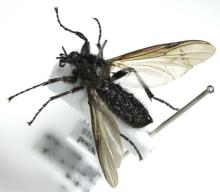
InsectsFlyHMCMS: Bi2018.1.1387The first appearance of males of the Bibionid fly Bibio marci in late April each year coincides approximately with the 25th of the month which is St. Mark’s Day, after which this fly is named. St ...Visit Page
-
InsectsBeetlesHMCMS: Bi2020.2.4346Cassida viridis is a leaf beetle found throughout England and Wales feeding on White dead-nettle and related species; its common name is the Green tortoise beetle because, like its reptilian namesake ...Visit Page
