You searched for: Insect
Results: 107
Filter search results
-
InsectsBeetleHMCMS: Bi2019.2.3793Scarabs were greatly revered by the ancient Egyptians because of their behaviour of rolling a ball of dung along the ground (to bury and eventually eat or use for nesting), and this was considered ...Visit Page

-
InsectsBeetleHMCMS: Bi2019.2.4032The Devil’s Coach Horse, Ocypus olens , is a rove beetle, and is a member of the Staphylinidae - one of the oldest families of beetles originating from the late Triassic period dating around 200 ...Visit Page

-
InsectsWaspHMCMS: Bi2016.2.181The female Diplolepis rosae is a small, 4mm long, gall wasp which uses her ovipositor to lay eggs in the leaf and flower buds of wild roses. After hatching, the emerged larvae produce chemicals which ...Visit Page

-
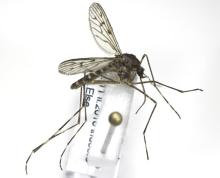
InsectsFlyHMCMS: Bi2018.1.1420The Banded mosquito, Culiseta annulata , is the largest, and one of the commonest, mosquitoes present in the UK. It may be found breeding in a variety of both natural and artificial water sources ...Visit Page
-
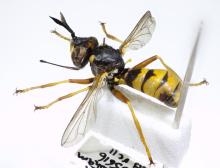
InsectsFlyHMCMS: Bi2011.12.614Conops quadrifasciatus belongs to the fly family Conopidae, known unflatteringly as the ‘thick-headed flies’ because their heads can be broader than the thorax (the next section of their body)! They ...Visit Page
-
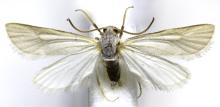
InsectsMothHMCMS: Bi2019.2.10122Although the Water veneer moth (Acentria ephemerella) is visually drab and unexciting, it has a most fascinating life cycle. Found during the summer months around ponds and the slow-moving, more ...Visit Page